
The Best Gravel Pedal?
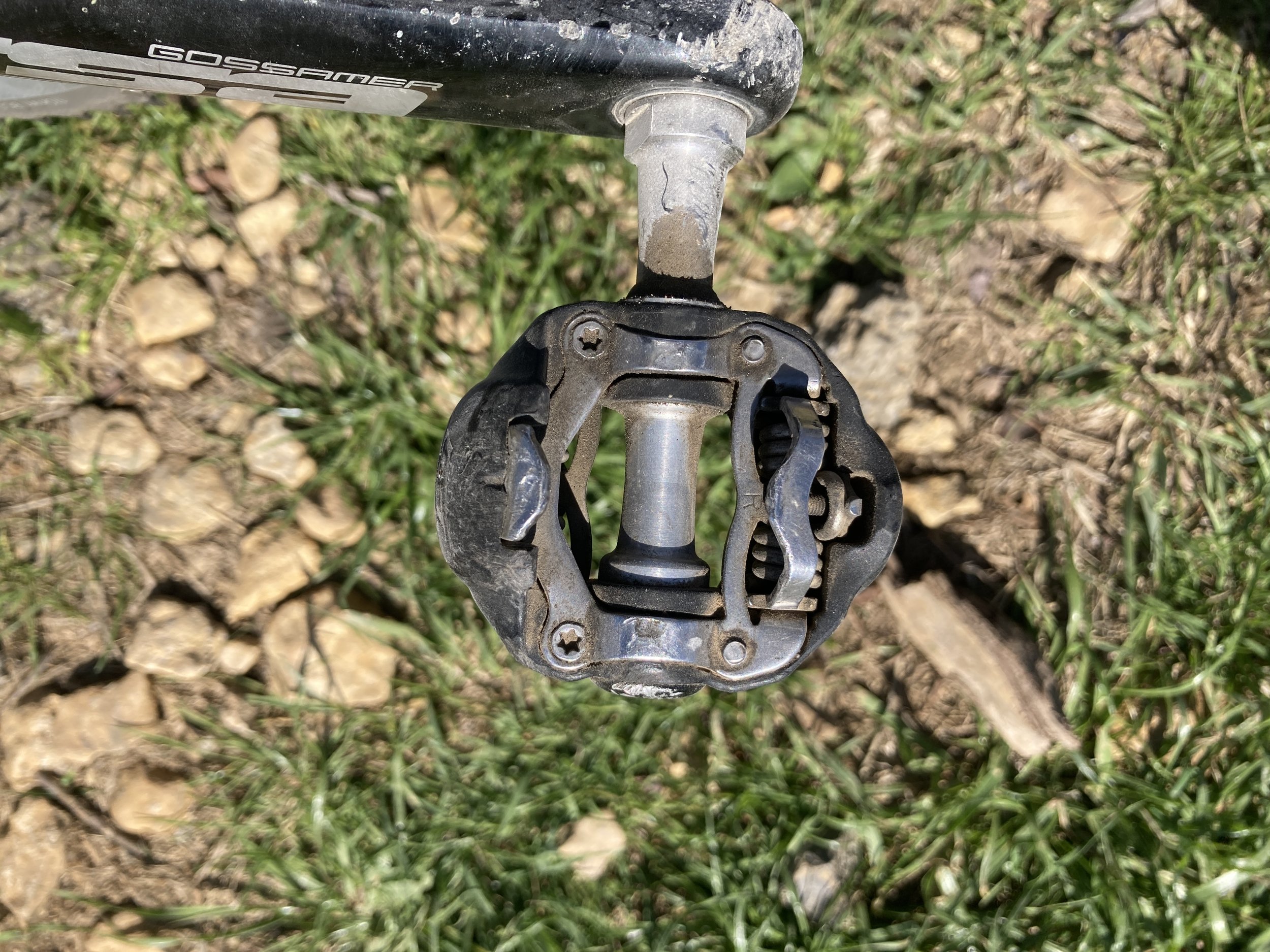
I’ll just cut right to it. It’s the Speedplay Syzr. I know, I know, what am I thinking, any jabroni’s google search is going to bring up the opposite of why these are the best, but bear with me here.
This is inspired because I often get questions about the pedals on my gravel bikes. That’s what I ride on the gravel.
First a little history. I won’t lie, I’m a big fan of Speedplay products. Or was. When the Zero road pedal was first introduced for testing in 2002 I was jumping at the bit. I wanted a pedal that had a more natural yet smoother float, security of which didn’t rely on cleat wear and binding tightness and a pedal you could sail through corners with. Also one that you didn’t pedal yourself out of digging through the stroke on those stupid steep climbs - like that uphill sprint I pulled through the bottom of the stroke on and ended up sending a shower of sparks through the field!
The Look “delta” style had 3-5-ish degrees of float, but it was a labored, resistance grinding float. Also, you had to time your cornering while pedaling to perfection. I mean, this was a skill you really had to practice to truly pedal right OVER the apex of the corner at just the right moment. Lest you miss the timing and stick a pedal and send yourself flailing into a family standing along the barriers at a corner exit. I mean, this is still the case today with delta cleat style pedals.
Before the Zero, Speedplay had the X-style pedals, but holy heck did your legs and feet feel like you were on ice skates. Or better yet, a newborn giraffe. I just couldn’t get behind it.
Then Speedplay finally introduced the Zero pedal. It was similar in idea to the X design and had a similar body shape. But the cleat itself was a c-shaped circlip that flexed as you stepped on the pedal body to engage. Best of all, it didn’t rely on cleat wear or binding tension for security and it had adjustable float up to 15 degrees! By adjustable, you could set it to float 1 degree heel right, and 6 degrees heel left. Or you could run it wide open with 7.5 degrees in each direction. Truly customizable! And the float was soooo smooth. You set the tension on the plates just right and it really felt appropriate to use the word “float” for the first time ever. Best of all, the dual sided entry made it a crit monster for jumping off the line. Growing up I practiced clipping into my Look pedals until I could do it without looking. Going to Zeros I could mash off the line with a front row start, or move up 30 places before the first corner “Froggering” around everyone else still looking down at their pedals. I never looked back and have never* ridden another road pedal ever.
Now, many people at first panned the idea of the Zero. Too many people had a bad experience with the X-Series and it had a learning curve to clipping in. There was also a claim that the “platform” was small, thus made for a loss of power transfer to the pedals. For a majority of people moving from a delta style, aka Look style cleat, where you engaged toe down, then pushed heel down to engage - being forced to step flat on the pedal and push down at once was a difficult transition and source of most of the complaints. But 18 years later, I don’t think anyone gives a second thought about it anymore - even as Wahoo had bought ot Speedplay. As far as the power transfer claims…”I said Hollywood, where’d he go? Where did Whooooo Gooooooo?”
But, what about dirt? On the mountain bike or for cross and gravel we were still stuck with existing options and designs from Shimano’s SPD, Time’s ATAC, Look’s ever changing attempts at, well, something, and of course Crank Brothers…
(Side Note: Funniest conversation I ever overheard at a bike shop: Customer: Do you have a Crank Brothers rebuild kit in stock? Mechanic: Yes, it’s a garbage can in the back and a brand new pair of Shimanos.)
All of them were designed with a compact cleat, recessed for a walkable shoe, and to clear mud and entry on both sides. But, like all other “clipless” pedals to a fault, featured mushy, ambiguous float. I mean, float isn’t everything...or is it? I would spend hours with a fitter to get my mountain bike pedals as dialed in as I could with my road pedals, but I would still have nagging aches after heavy gravel miles on them. Moving around with the bike to keep smooth, consistent pedaling under me as the bike is bouncing around, I probably utilize the little bit of float much more than other people.
So, long story longer, when Speedplay introduced the Syzr pedal, I thought it had life altering potential. Imagine the smooth, adjustable float of the Zero road pedal, but in a mountain bike cleat. Like your first time in bib shorts, or when DeFeet created the performance sock. Life. Changing. Moments. I was sold.
But once again, reviewers and early adopters were not so kind to the product. And not without reason. The biggest complaint was, once again, you had to relearn how to clip in.The reason this time: The cleat itself pivoted. The float wasn’t engineered in tolerance like every other cleat, but similar in idea to the cleat rotating on a plate like the Zero cleat. This meant that when you kicked your heel out to unclip, the cleat generally stayed in that position until you clipped back in. At which point, you would have to either point your heel out to get back in, or nudge the cleat to pivot back into the straight ahead position. Looking back, I remember this being frustrating, but today, I don’t even consciously think about it. Learning the process to clip in has been made natural to me. Just like every with other pedal.
One of the other faults with engagement was that this was the first (?) Speedplay pedal to ever use a spring actuated binding mechanism. But since Shimano has the patent on it, Speedplay flipped the binding to the front to get around the patent. Honestly, even as a lover of the pedal I’ll knock them for doing this. Because even though I don’t think about the movement now, you have to press down and forward with enough force to push the binding back, and then snap, you’re in. In every other binding design pedal the front toe point, hook, loop and catch motion is static and then you use force to bend down the rear binding. I remember this being incredibly frustrating, and if you’re a new cyclist. Fuhgeddaboudit!
They should have just paid Shimano a patent royalty and licensed the rear binding mech. Because the floating cleat is truly the heart of the problem they were trying to solve. Instead, you had a pedal with one of the biggest learning curves ever. Also, if you bunny hopped an object and accidentally went a bit toes up you ran the risk of launching yourself out of the pedals. Of course let’s also remember the East German judge has always been critical on the landings.
So you crank down the spring tension, but even if you learned how to get in, with the increased spring tension you had to learn all over again. Palm Face Emoji.
So why do I love it still?
Because it’s the perfect gravel pedal. It is a dirt version of a road pedal. Or, shoot, touring pedal for all you cross-country Wandrering Earthers (yes, that’s the spelling) out there.
As far as pedal security, let’s be honest, you’re not bunny hopping very much except over the most gnarly potholes and water bars. Usually you’re only doing that if you’re at the pointy end of the gravel race without much road to maneuver. Otherwise you drive around them. You should also probably work on your bunny hopping form if you’re using the pedals to get up, get up and get busy.
But it’s that butter smooth float, as much or as little as you want, allowing all those hard joints and soft tissue to move a little bit, breathe, get out of their static picking things up and putting them down. I think if more people tried the pedal, they’d understand it.
I pick and choose pedals for the application, and use many different across the board. While I love Speedplays, for a couple of bikes stashed around the country I have the Assioma Duo* pedals so I can have a portable power meter option. Off road for mountain or cross I use Shimano XTs as well as the Look S-Track (best mud and snow pedal ever, change my mind) and then the Syzr for the gravel or road touring.
Then there’s the legendary Speedplay durability. I still have an original pair of Zero pedals. They are now on one of my wife’s bikes, but with regular maintenance on roller bearings and replacement of the cartridge bearings once, they are still going strong. However, I’m noticing some concerning wear on the side of the binding mechanism on the Syzr. Like I’m slowly forging metal away with each pedal entry.
But, there’s always a but, right? Wahoo bought Speedplay in 2019 and the Syzr was cut (I needed to make one scissor pun in here, right?) out of the lineup. Perhaps it was decided to cut them sooner, pre-acquisition. I don’t blame them, the pedal was much maligned, poorly reviewed and probably returned to retailers by the truck load (where they entered the previously mentioned garbage can and Shimano “upgrade kit”).
So now they are hard to find, and what’s left are coveted by the hardcore aficionados like myself. I’m sure retailers will have some stock of cleats and complete pedals sets to sell for a while, but the prices I’m seeing reflect a limited market and that market is mainly on eBay. New, cheap chromoly pairs going for $250? Used stainless sets going for that much, and new ones going for $450 or more? Do I want to spend that? No. Will I? Probably. All at the risk of becoming like those crazy Frog users that customer service reps at Wahoo will make fun of.