It’s On: The Cheap Bike Challenge
I Bought the "Wrong" Ozark Trail Gravel Bike
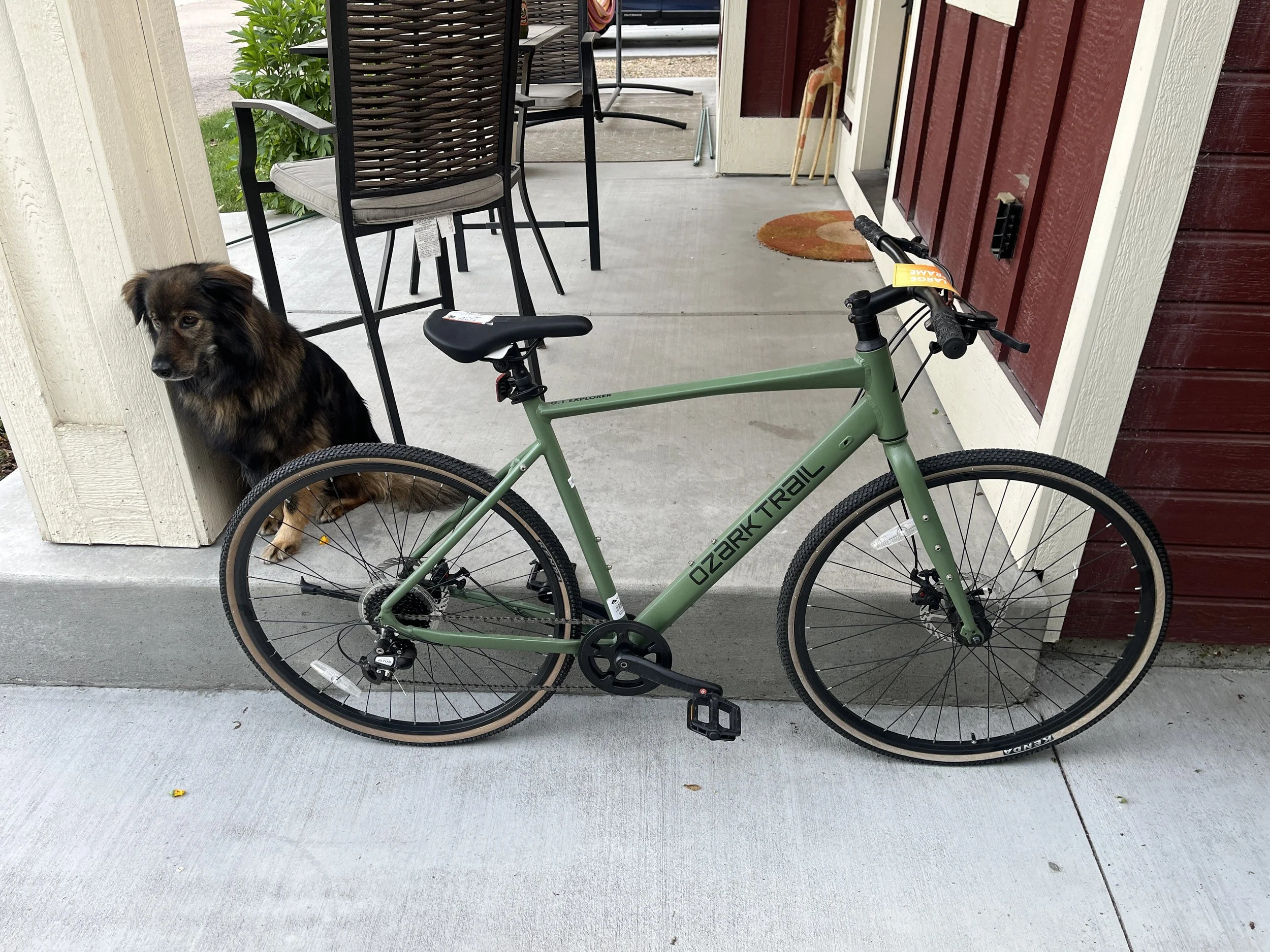
The cheap bike challenge is officially underway, and we're starting with a machine that we didn’t originally look at. It’s still the Ozark Trail G.1 gravel bike, but it’s the flat bar version. You might be asking: why the flat bar version when there's a drop bar model sitting right next to it on the shelf and you are a dyed in the wool drop bar diva? Hear me out, because this decision came down to some real mechanical thinking, and I think the case is stronger than it looks.
Here's the thing that kept tripping me up when I was planning the upgrade cycle for this project: wheels. Specifically, the drop bar version uses a freewheel hub — and that's a dealbreaker for a build we're going to push on gravel roads and double tracks. A freewheel setup means the axle is poorly supported, and genuinely prone to snapping under load. It was a bad design when it was created, a pedigree it has proudly carried forward.
The flat bar version, by contrast, ships with an actual freehub body. That means a properly supported axle, a better wheel platform, and — critically — a wheelset that can actually grow with the build. We were planning to swap bars anyway, so the flat bar starting point isn't really the sacrifice it seems.
This makes more sense if you are just getting into the gravel space or are a new rider outright. You can grow with the bike. $300 to initially get a bike and then lets say we are going to spend $100/month on upgrades. Having a wheelset that could potentially accept a 9, 10 or even possibly an 11 speed cassette helps us stretch our tentative budget and upgrade cycle the most.
Even if you are an experienced rider, this is a great bike to start learning mechanics on. It is still a pretty simple machine and not overly complicated. So Youtube University will be very handy here for those of you new to wrenching.
Also, the flat bar version ships with an 8-speed gear cluster versus the 2 x 7. This means we can just go ahead and get a drop bar shifter to tide us over until the real upgrading begins. Since gravel is all about the 1x chainring now, we’ve got a setup that seems to make more sense from the word go, than compromises because we believe that “front derailleurs are not a crime.”
The flat bar version is forty dollars cheaper than the drop bar 2×7 version. The rear derailleur and shifter are both upgrades over what the drop bar comes with — so those get set aside for a future commuter pub bike build rather than thrown away. A cartridge bottom bracket is a nice surprise at this price. And the 175mm cranks on the large frame for a six foot plus tall person like myself? That's a detail a lot of budget bikes get wrong, and they got it right.
I ordered it and the thing showed up the same day. Genuinely didn't expect that. What I didn't expect was the state it arrived in. I don’t know if I’m being picky, or should have expected more. It came fully assembled, not boxed. I wanted it in the box so I could build it up fresh and verify everything myself. Instead I'm having to deconstruct and inspect after the fact, which isn't the end of the world. The delivery driver had to pull it out from behind stacks of empty bread racks, so it came off the van having been treated as cargo.
The bike clearly sat outside for a long time before sale. The hang tag was bleached by the sun. There's rust on a number of bolts and the rotors. Dust everywhere — the kind that builds up when something's been sitting in the elements for a while, possibly covered, but still outside. A few scratches on the frame. A big gouge on the pedals, though I'm not using those anyway and, even though I have a pump, y’all couldn’t put a little bit of air in those flat tires?
A part of the issue with the bike sitting outside is also the rear rim seam wasn’t finished very well. So there was legitimate corrosion at this spot. I wiped it off with my fingers, but it has me concerned for the integrity of the wheel. Well, what’s the big deal if you are going to upgrade eventually? It’s more about not wanting to lose any teeth or get a TBI here from the start. It will definitely be in the back of my mind to maybe be a little more dainty with it on the gnar, gnar.
Positives:
- Freehub body — real wheel platform
- 8-speed, drop-bar compatible
- 175mm cranks on the large frame
- Cartridge bottom bracket
- Upgraded derailleur and shifter (saved for a future build)
- $40 cheaper than the drop bar version
- Same-day delivery
Negatives:
- Rust on bolts and rotors
- Sun-bleached tag, clearly stored outside for a long time
- Arrived fully assembled, not boxed
- Several scratches on the frame from transit
- Gouged pedals (not keeping them anyway)
None of the disappointments are mechanical dealbreakers — rusty bolts get replaced, scratches don't affect ride quality, and the pedals were getting swapped regardless. The stuff that matters — the wheel platform, the drivetrain, the bottom bracket — is solid and better yet, inspiring for the price point. We haven’t ridden it yet though, and we know the brakes are going to be a problem. That’s another early upgrade item on our list, but it also could just be setting them up well solves that problem. We’ll see.
This is the whole point of the cheap bike challenge. You learn what to look past, you learn what actually matters, and you learn how to wrench on a bike from the ground up. More on the frame details in the next post about this project — there's more to like here than meets the eye.