
An Odyssey Of (NOT) Being Cold
Winter has swung through the Southeast with vengeance this weekend. When I first started riding as a kid, winter training options were limited. You had a wind trainer that was so loud you could do nothing but stare at a blank wall with your thoughts. You could ride rollers for hours on end, which was fun in some ways, but also took a long time to master how to ride and watch TV. Or—you could go out in the mess.
I went out in the mess a lot, and many times came back more purple and colder than a grape popsicle. I made do with gear I could repurpose until I could get dedicated gear.
I was born in Tennessee, but I really grew up—and my riding days truly started—outside of Louisville, Kentucky. There were many memorable snowstorms and winter events during my teenage years, and having the right gear made a huge difference. It took a while to amass my collection, though, and of course there were times when I surfed the pavement in my nice gear. Nothing like shredding a $250 pair of windproof, waterproof tights on a frozen metal grate bridge.
Yes, I know—these days there’s Rouvy, Zwift, and smart trainers, which make indoor riding so accessible. I know people who won’t even ride bikes outdoors in the summer anymore. But I think getting out there in the crisp weather, as long as you’re geared up, can be a great mental break. Or maybe you don’t want to spend money on a virtual riding subscription when there’s rarely long stretches of consistently bad weather in the South. Either way, good gear comes in handy—especially on event days when the ride still happens unless the weather is truly dangerous.
One thing about being tall is that my hands and feet really struggle. It doesn’t matter how thick the socks or gloves are—they always seem cold. Some of the solutions I’ve found are below. One of the biggest lessons, though, is making sure my core is almost overly warm. That seems to push blood flow out to the extremities and helps with thermal regulation.
I’m not going to go over all of my cold weather kit—that would be a novel. But inspired by the current deep freeze, I’ll start with my most extreme cold-weather setup. You can always work backwards from here for less brutal days and maybe I’ll write a spring/fall gear post. Some of this gear is discontinued, and I haven’t found good replacements yet (thankfully what I have is still holding together). If you’re using something that works where I’m coming up short, I’d love to hear about it.
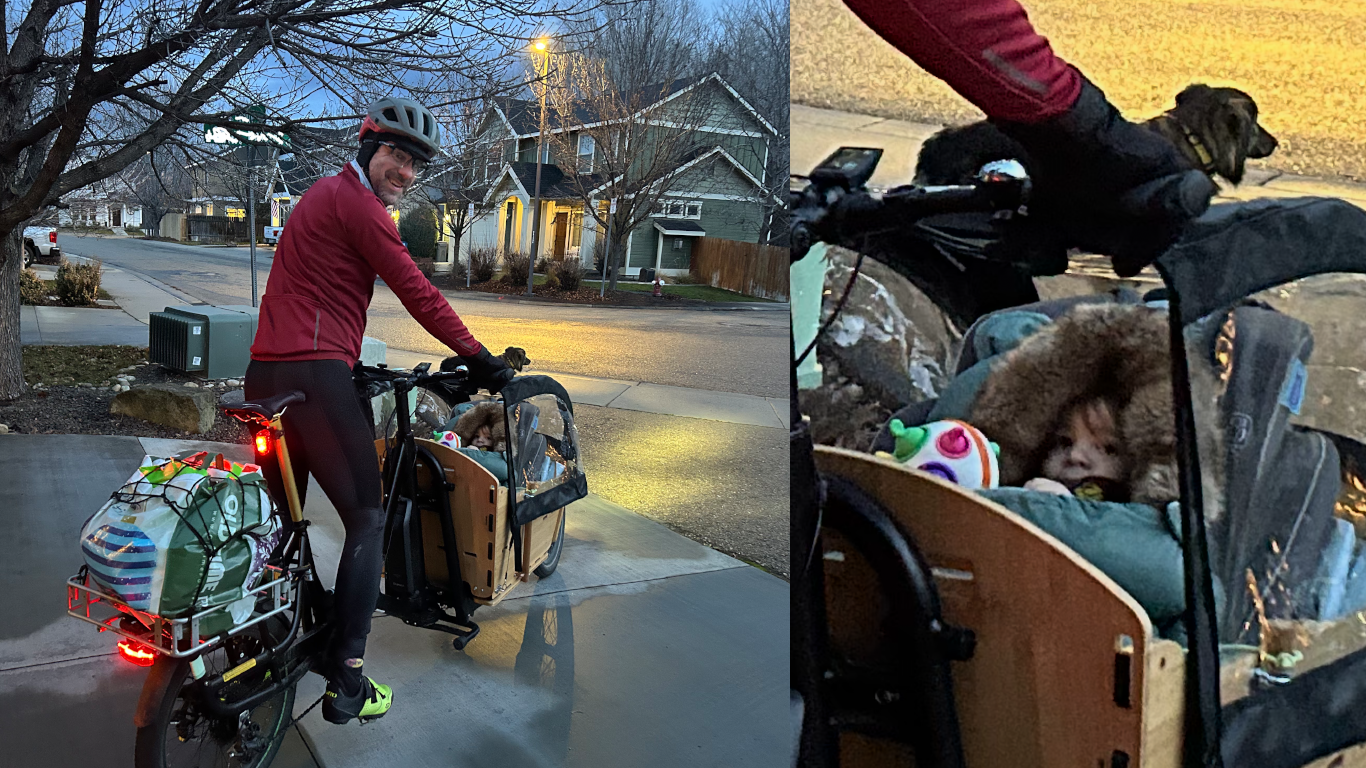
Here’s a pic of me taking Luca to school when it was about 34*F out. Notice him snuggled up in his little sack that the car seat straps thread through?
My 22* Morning Kit
I have ridden Luca in when it was 22* at its coldest. It was testing my limits but he was snug and fell asleep. Here is what I wore to manage those temps. Yes, before you make fun of me, I am squidded out while riding a pedal assist cargo bike. In my defense, roundtrip dropping him off and to the office and back is 32miles. No way I am raw dogging that kind of distance if you catch my drift.
Torso & Arms
Rapha long-sleeve thermal base layer
No-name long-sleeve fleece cycling jersey
Specialized Therminal jersey / jacket
Legs & Feet
Specialized Element Windstopper bib tights
DeFeet Woolie Boolie socks
Rocky Gore-Tex socks (discontinued…) :’(
RockBros shoe booties
Head & Face
Generic wrap-around face mask
Random neck gaiter
RockBros full-coverage winter cycling cap
Proviz Reflect360 helmet cover
Hands
RockBros handlebar mitts
The North Face Apex gloves
Some accessories can absolutely be swapped for cheaper options, which I’ll point out as we go. But there are a few core elements you really shouldn’t skip.
Legs
I’m wearing Specialized Element Windstopper bib tights in the photo. The windproof, waterproof version has been discontinued by the Big S, but Pearl Izumi’s AMFIB line is a solid alternative. I had a pair until I surfed some chip seal and ruined them (0/10 experience, don’t recommend doing that—these are pricey).
Legs are hard to layer without restricting movement, so you really want an all‑in‑one solution here. These kinds of tights are a game changer.
Base Layers
Base layers don’t need to be fancy. I rotate between cheap and expensive ones. I’ve used both Rapha and the Specialized Seamless Long Sleeve Base Layer, which is solid and comfortable.
There’s also a growing movement around mesh base layers to improve moisture transfer. On cold but sunny days, I’ll use something like this inexpensive find under a long‑sleeve jersey and windbreaker: Mesh Base Layer (Budget Option)
If you want the original Scandinavian version (and the price tag to match): Brynje Mesh Base Layers
Outer Layers
For the mid‑layer, any cheap long‑sleeve fleecy jersey will work. My favorite is actually a knockoff Pas Normal Studios jersey a friend gifted me.
For the outer layer, though, I don’t cheap out.
I use the Specialized Therminal Jersey, like in the photo, which appears to be discontinued in the U.S. now. You can still get it from Canada if you enjoy paying extra taxes on top of your taxes. Ah yes—geopolitics.
Head & Face
For really cold days, I’ll stack a helmet cover with winter caps. The Proviz Reflect360 helmet cover adds warmth and visibility.
Side note: I also have the Proviz Reflect360 rain jacket. That thing will keep you dry and seen. Not the most breathable, but I’ve had it for over 10 years and it’s one of the best pieces of cycling clothing I own.
For chilly days where I don’t mind my ears exposed—or on cold race‑effort days—I’ll use something lighter like this: Lightweight Wind Cap
On true cold days, I go cheap and effective:
These items disappear, get dropped, or get eaten by the washer and dryer. No reason to overspend.
Feet
Feet were my biggest struggle for years.
About 15 years ago, my brother‑in‑law gave me a pair of Rocky Gore‑Tex socks he’d used while deployed in hostile, exposed, cold,high‑elevation environments. They’re discontinued now, but they changed everything for me when I first tried them out. I hate wet feet, and these are the only socks that ever truly kept mine dry—on cold days or when the weather turned.
They worked so well I stopped wearing booties altogether… until I combined the two for really cold days.
You don’t need expensive shoe booties. I’ve gone through dozens over 30+ years. Neoprene wears out—especially when you walk or touch the ground. Even ballerina toe‑stops eventually punch holes.
This is where I cheap out: RockBros Neoprene Shoe Covers
I don’t cheap out on socks. I’ve been riding DeFeet Woolie Boolies for almost three decades. Quality has dipped a bit over the years, but they’re still better than almost anything else I’ve tried.
Hands
Hands are the toughest. Variables include temperature, precipitation, touchscreen compatibility, wind resistance, and dexterity for braking and shifting.
For chilly (not cold) days—or when my core is hot—I’ll use DeFeet Wool Blend Dura‑Glove.
These are great for upper‑40s to low‑50s with spring kit, or as a way to dump heat mid‑ride. I’ve never had great luck with glove liners—they limit dexterity too much for me.
For colder or wet days, I stumbled into these and haven’t looked back. Great dexterity, weather resistance, and touchscreen‑friendly: The North Face Apex Gloves
When temps drop into the 20s and I still insist on riding, I bring out the nuclear option: Bar Mitts
These are basically oven mitts for your handlebars. I wear the North Face gloves inside them and my hands stay toasty. Yes, you look like a dork. But, I wish I had embraced looking like a dork sooner—it’s that good.
Final Thoughts on Staying Warm
One of the biggest things you can do to stay warm during winter rides is to limit stops. If you start getting cold, ride harder. Find a hill. Going uphill reduces wind chill, increases effort, and makes you fitter. It’s a trifecta of winning. So much winning. All the winning.
Dress well. Ride with purpose. Don’t stop.
Some (but not all) of the links above may earn us a commission if you click them. Most of these products can be purchased directly from local retailers as well, so remember to support your local bike shop and don’t be afraid to ask questions and utilize their institutional knowledge whenever you can.